 Peptide Cream Reviews
How Long Do Peptides Take to Work? (Realistic Timeline)
Peptides are not instant, and anyone who promises overnight results is selling hype. Here is what to expect, week by week, and how to make sure you give your cream a fair chance.
The timeline
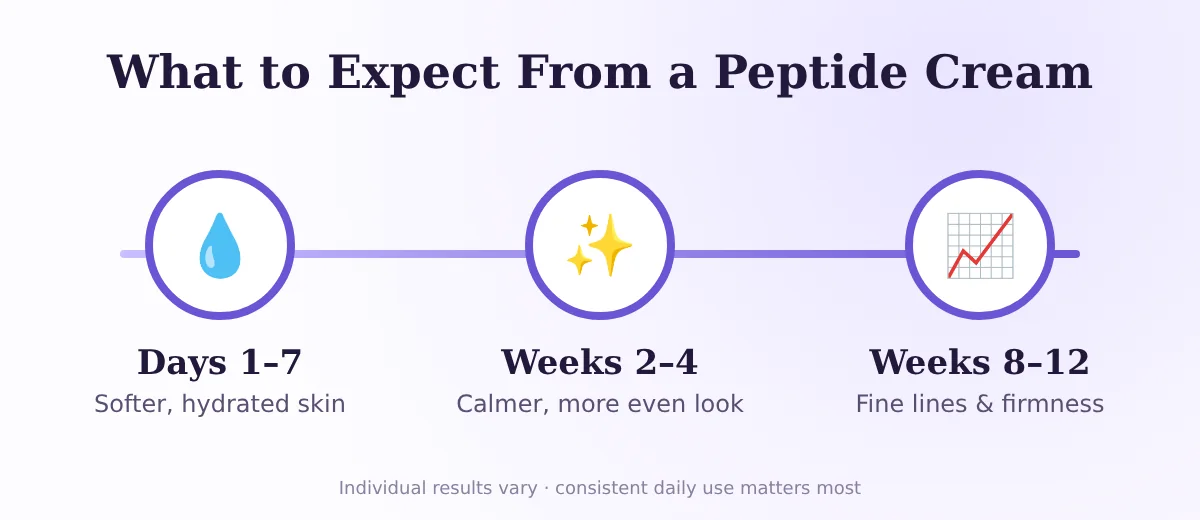
- Days 1 to 7: hydration. Humectants such as hyaluronic acid make skin look smoother and fine dehydration lines less visible.
- Weeks 2 to 4: comfort. Barrier ingredients reduce tightness and flaking; skin looks calmer.
- Weeks 8 to 12: the window where peptide studies typically measure changes in fine lines and firmness.
What speeds up (or slows down) results
- Consistency: daily use matters more than any single ingredient.
- Sunscreen: UV exposure undoes progress.
- Barrier health: over-exfoliating slows visible improvement.
- The whole formula: peptides work better alongside niacinamide, ceramides and hydrators.
How to track your progress
- Take a photo on day 1 in natural light, no makeup.
- Repeat every two weeks in the same spot and light.
- Compare at week 8 and week 12, not day to day.
Why multi-month packs make sense
Because results take 8 to 12 weeks, a one-month trial rarely tells you much. The 3- and 5-month packages of the Revitol Anti-Aging Peptide Cream and Revitol Eye Cream lower the price per jar, and both carry a 60-day money-back guarantee.
Check Peptide Cream price →Official Revitol store · 60-day money-back guarantee
Frequently asked questions
How long do peptides take to work on wrinkles?
Most studies measure changes after 8 to 12 weeks of daily use. Hydration-related smoothing can appear within days.
Why am I not seeing results from my peptide cream?
Common reasons: not enough time, inconsistent use, skipping sunscreen, or a damaged skin barrier from over-exfoliating.
Should I buy a 3-month supply?
If you want to judge a peptide cream fairly, yes. One month is usually too short to see changes in fine lines.